
Chrome is flagging our ics downloads as dangerous. How do we stop getting flagged? | Community
Skip to main content
Laura_Starkie
New Participant
November 20, 2020
Solved

Chrome is flagging our ics downloads as dangerous. How do we stop getting flagged?

  • November 20, 2020
  • 1 reply
  • 9863 views

We've noticed in the last couple of days that Chrome is flagging our ics file downloads as insecure:
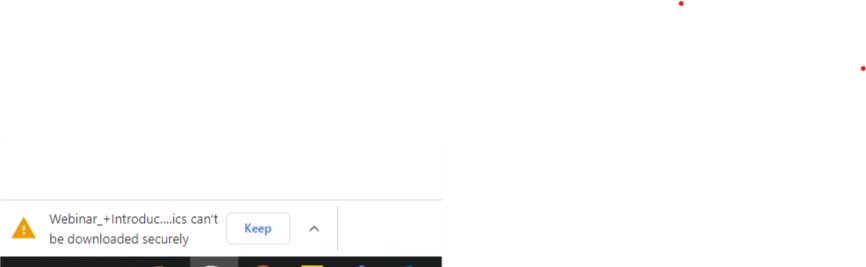
 

We're getting this information form the Chrome help center:https://support.google.com/chrome/answer/6261569?p=mixed_content_downloads&visit_id=637414831076777406-3841747890&rd=1 


These files are linked from our event confirmation emails and utilize the calendar file tokens within the event programs.


It's my understanding that Chrome are releasing updates to flag certain file types. 

Is anyone else seeing this issue with their calendar files and know of a way around it or a way to resolve? The file is still functional if you select 'keep' but it doesn't look very professional to have your files flagged as a potential virus!


Thanks in advance for any advice.

This post is no longer active and is closed to new replies. Need help? Start a new post to ask your question.
Best answer by SanfordWhiteman

That's not a secure download, since it redirects to  the insecure


http://your.fitch.group/rs/732-CKH-767/58231/Virtual+Roundtable+INSERT+WEBINAR+TITLE.ics  


The initial connection being https: doesn't matter if the next request is http:.


1 reply

SanfordWhiteman
New Participant
November 20, 2020

If you don't have SSL on your LP domain, this warning is unavoidable (because it's a plain http:// link).

Nico_Veltri
New Participant
November 25, 2020

Hi Sanford, 

I work with @laura_starkie and have looked over this with her.  


We do use https:// for nearly all of our sites, including the ICS file downloads.  

  Example: https://goto.fitchratings.com/I0g1dCE0PNGVC43s0a0KH07


SanfordWhiteman
SanfordWhitemanAccepted solution
New Participant
November 26, 2020

That's not a secure download, since it redirects to  the insecure


http://your.fitch.group/rs/732-CKH-767/58231/Virtual+Roundtable+INSERT+WEBINAR+TITLE.ics  


The initial connection being https: doesn't matter if the next request is http:.